⚖️ Business Structures: Core Summary
- Best For: Entrepreneurs launching a new commercial venture in the US.
- Key Consideration: Personal liability protection versus tax complexity and administration.
- Common Choice: Limited Liability Company (LLC) due to flexible taxation and asset protection.
- Key Benefit: Shields personal assets (home, bank accounts) from business debts and lawsuits.
Launching a new business is an exciting venture, but before you can sell your first product or sign your first client, you must make a critical legal decision: choosing your business structure. The structure you choose affects everything from your daily operations and tax obligations to the amount of personal liability you face. In the United States, the most common structures are Sole Proprietorships, Partnerships, Limited Liability Companies (LLCs), and Corporations. This guide demystifies these structures to help you select the right entity for your goals.
1. Sole Proprietorships: Simple but Risky
A sole proprietorship is an unincorporated business owned and run by one individual. There is no legal distinction between the owner and the business. If you begin freelancing, consulting, or selling custom bicycle components online without registering a formal business, you are automatically operating as a sole proprietorship.
- Pros: Extremely easy and inexpensive to form; minimal paperwork; complete managerial control; taxes are filed on the owner's personal tax return (pass-through taxation).
- Cons: Unlimited personal liability. If your business is sued or runs into debt, creditors can seize your personal assets (your house, car, and personal bank accounts) to satisfy the obligations.
2. Limited Liability Companies (LLCs): Flexible Protection
The Limited Liability Company (LLC) has become the most popular business structure for startups and small businesses in the US. It combines the personal liability protection of a corporation with the tax flexibility and simplicity of a partnership.
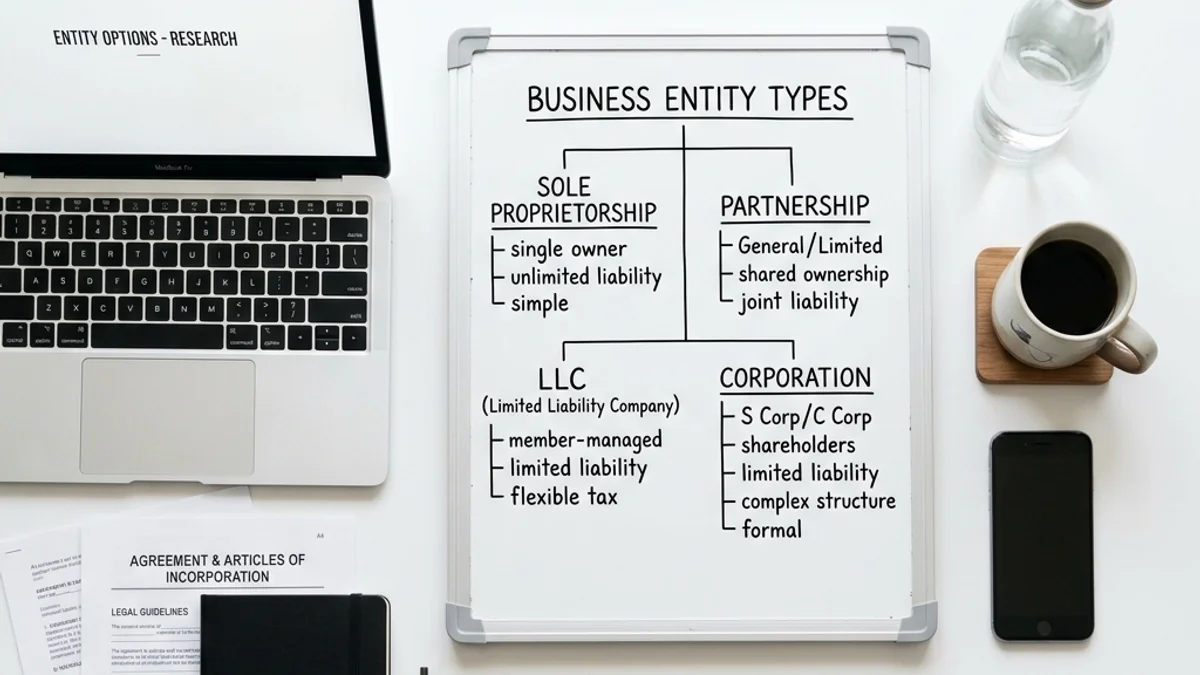
In an LLC, the owners are referred to as "members." An LLC protects your personal assets from business liabilities. If the LLC goes bankrupt or is sued—for instance, if a customer claims a bicycle you sold had a defective frame—only the assets owned by the LLC are at risk. By default, LLCs enjoy pass-through taxation, meaning the business itself doesn't pay federal income taxes; profits and losses flow directly to members' personal tax returns.
"Operating as an LLC requires maintaining a strict separation between personal and business finances. Mixing funds can lead to a legal scenario known as 'piercing the corporate veil,' which strips away your personal liability protection."
3. Corporations: C-Corp vs. S-Corp
A corporation is an independent legal entity separate from its owners (shareholders). It is the most complex structure, requiring formal bylaws, regular shareholder meetings, and a board of directors. There are two primary types of corporate tax classifications:
- C-Corporation (C-Corp): The default classification for corporations. It is subject to "double taxation," meaning the corporation pays tax on its profits, and shareholders pay tax again on the dividends they receive. However, C-Corps are required if you plan to raise venture capital or go public.
- S-Corporation (S-Corp): A special tax status that allows profits and some losses to pass through directly to owners' personal income tax returns, avoiding double taxation. To qualify, S-Corps must meet strict IRS guidelines, including a limit of 100 shareholders who must be US citizens or residents.
Key Factors to Consider When Selecting a Structure
When selecting the right business structure for your startup, ask yourself these three essential questions:
- How much risk are you taking on? If your business involves physical products, public services, or potential safety hazards (such as manufacturing outdoor gear or organizing cycling events), avoiding sole proprietorships is critical due to the risk of personal lawsuits.
- Are you seeking outside funding? Venture capital firms almost exclusively invest in Delaware C-Corporations. If you plan to self-fund or seek traditional bank loans, an LLC offers fewer administrative burdens.
- What is your tax strategy? Double taxation under a C-Corp might be offset by the ability to deduct fringe benefits and retain earnings. An LLC offers simple pass-through taxation by default but can also elect to be taxed as an S-Corp or C-Corp if beneficial.
Frequently Asked Questions
Can I change my business structure later?
Yes. Many businesses start as sole proprietorships or LLCs and later convert into C-Corporations as they grow, take on investment, or offer stock options to employees. However, converting can involve complex legal paperwork and tax consequences, so planning ahead is highly recommended.
Do I need an attorney to form an LLC?
Not necessarily. In most US states, you can file Articles of Organization online directly with the Secretary of State's office for a small fee. However, consulting a business attorney is wise if you have multiple partners or complex operating agreements.

