💡 IP Protection: Trademarks vs. Copyrights
- Trademarks Protect: Brand names, logos, slogans, and commercial identifiers.
- Copyrights Protect: Original creative works (writings, photos, software code, music).
- Registration Body: USPTO for Trademarks; US Copyright Office for Copyrights.
- Key Benefit: Establishes official ownership and enables federal litigation.
Intellectual Property (IP) is one of the most valuable assets a modern business can own. It represents your brand's unique identity and creative output. However, many business owners confuse the different forms of IP protection, leading to costly mistakes like failing to register assets or registering them under the wrong legal framework. The two most common forms of protection are Trademarks and Copyrights. This guide explains the differences and shows you how to secure both.
1. What is a Trademark?
A trademark protects assets that identify the source of your goods or services to consumers. It prevents competitors from using confusingly similar marks that could deceive customers. Trademarks are registered with the United States Patent and Trademark Office (USPTO).
- Examples: Business names (e.g., Apple, Nike), logos (the swoosh), brand slogans ("Just Do It"), and even distinct colors or sounds associated with a brand.
- Duration: Trademarks can last indefinitely as long as you continue to use the mark in commerce and file regular maintenance renewals with the USPTO.
2. What is a Copyright?
A copyright protects original works of authorship that are fixed in a tangible medium of expression. Unlike trademarks, which protect commercial identity, copyrights protect creative content. Copyrights are registered with the US Copyright Office.
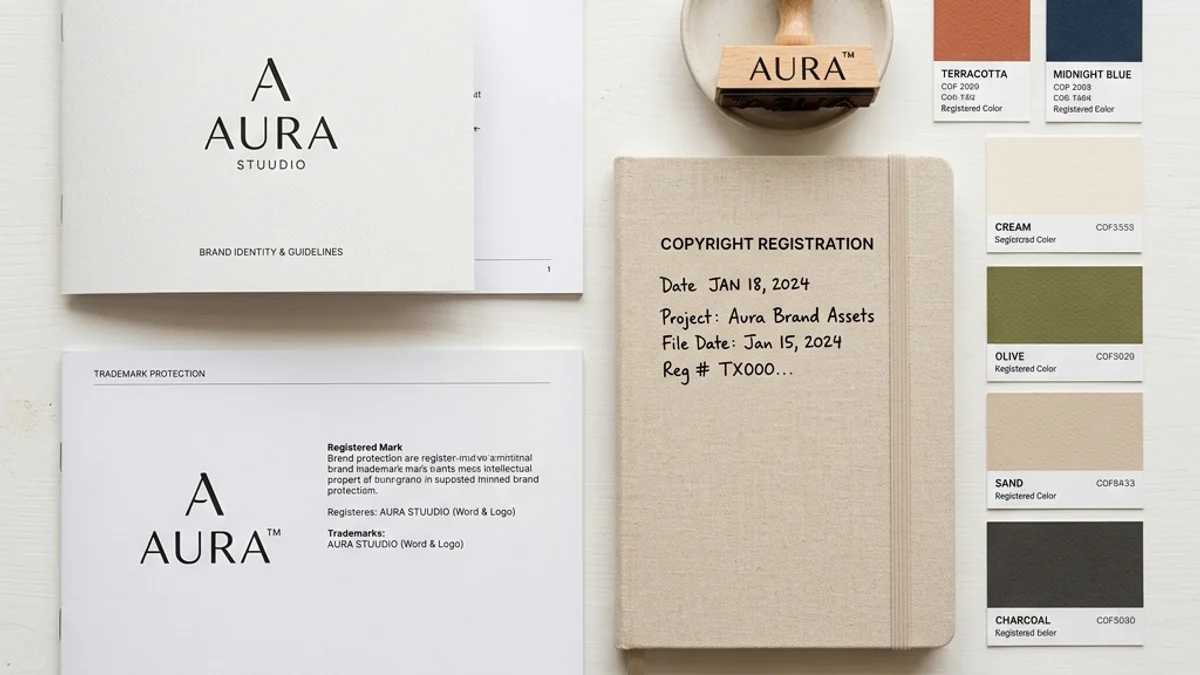
- Examples: Literary works (books, blogs), visual arts (photographs, illustrations, designs), software code, audio recordings, architectural plans, and films.
- Duration: For individuals, copyright protection lasts for the author's life plus an additional 70 years. For works made for hire, it lasts 95 years from publication or 120 years from creation.
"Copyright protection exists automatically the moment you create the work. However, you must officially register the copyright with the US Copyright Office before you can file a copyright infringement lawsuit in federal court."
When to Use Trademark vs. Copyright
Understanding which tool to use is straightforward once you identify the asset's purpose:
- Use a **Trademark** if you are protecting your brand name, logo, or product names to establish yourself in the marketplace and prevent brand confusion.
- Use a **Copyright** if you are protecting the content of your website, your marketing brochures, your custom code, your photography, or your training videos from being copied and republished.
Frequently Asked Questions
What is the difference between TM and ® symbols?
The **TM** symbol indicates that you claim common-law rights to a trademark, but it is not registered yet. The circled **®** symbol can *only* be used once your trademark is officially registered and approved by the USPTO. Using the ® symbol without a registration is a federal offense.
Does a state-level business registration protect my brand?
No. Registering your LLC or corporation name in your home state only prevents other businesses from registering that *exact* name in that state. It does not give you trademark rights or stop someone from using the name in other states. Only a federal USPTO trademark registration provides nationwide protection.

